Posts Tagged ‘food allergies’

Chocolate Heaven for Celiacs in Toronto

Monday, April 21st, 2008

When I was diagnosed with celiac disease, one of the thoughts I consoled myself with was that at least I could still have chocolate. I was only partially right: chocolate is naturally gluten-free, but some companies add wheat or malt for flavoring or consistency. It turned out that some of my favorite treats contained gluten, including Lindt milk chocolate truffles, and Smarties, a British analog to M&Ms (I grew up in Canada, so this was a much loved childhood candy).

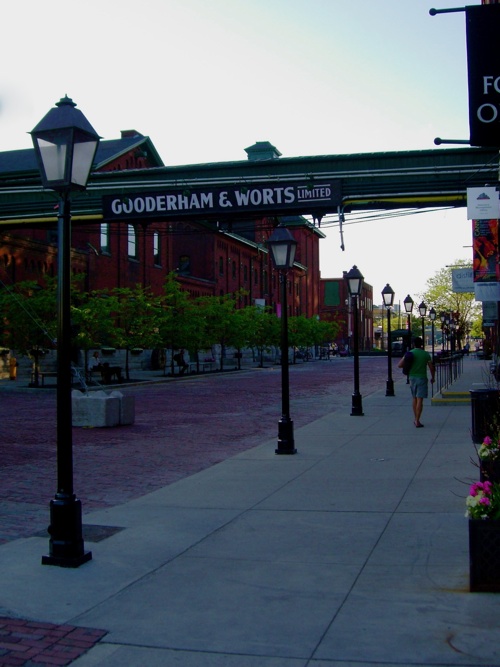
I have a sweet tooth, so finding delicious gluten-free chocolates has become an ongoing quest for me. That’s why I was delighted to discover SOMA Chocolatemaker in Toronto. The shop is located in the city’s Distillery Historic District, a network of restaurants and boutiques housed in Victorian red-brick factory buildings that once contained the largest alcohol distillery in the British Empire. Depending on when you visit, you might catch the chocolate-makers at work behind the clear glass wall. Chocolates made in-house are displayed with signs alerting visitors to the presence of gluten or common allergens. There are several gluten-free bars to choose from, but my favorite is the elegantly uncomplicated blend of milk chocolate and dried cherries. SOMA’s truffles are expensive, but they pack such punch (think aromatic bergamot with bittersweet chocolate, or caramel inside dark Venezuelan chocolate dotted with fleur de sel) that having just one is supremely satisfying.

SOMA also makes ice cream and sorbet on-site as well. While the waffle cones aren’t gluten-free, you can get the frozen treats in a dish. Choices vary with the season, but the ones I’ve enjoyed include the lemon sour cream, the exceptionally rich Venezuelan vanilla, and the Ontario blueberry sorbet. Since SOMA produces its products in small batches, not all flavors are available on every visit — but that’s just more incentive to drop in on a regular basis.

SOMA Chocolatemaker [address] Distillery Historic District, 55 Mill Street, Toronto, Ontario, Canada [tel] 416-815-7662 [email] info@somachocolate.com [web] www.somachocolate.com

Celiac Disease in Translation

Monday, April 7th, 2008

In the four years since I was diagnosed with celiac disease, I’ve traveled to six countries where I didn’t speak the language. Asking the right questions about food preparation when you, your server and your chef all speak the same tongue can be challenging. When you’re dealing with translation issues, it makes the entire process that much tougher. Eating at a restaurant is always an exercise in trust; for the gluten-intolerant, it feels especially risky. I plan ahead by printing celiac disease translation cards before leaving home. Here’s how to do it — for free.

  1. Start by checking for free celiac information cards from national or regional associations. Both the Czech Coeliac Society and the Swiss Celiac Society offer such cards online. For other countries, take a look at the “International Celiac Societies” listed on the Resources page at Celiac Handbook. Only a few of them provide a card, but hopefully the number will increase. Print several copies so you won’t mind if a card gets damaged in a restaurant kitchen.
  2. The Celiac Travel website provides an impressive selection of cards in many languages (currently there are 38, including Arabic, Japanese, Italian, Portuguese, Russian, and Urdu). I’ve used both the Hungarian and Spanish cards from this site and found that they worked extremely well. Given that several companies are charging money for celiac translation cards, I have to tip my hat to Roger and Lyndsay, who run this site, because they’re providing these detailed cards for free (a small donation is requested but not required).
  3. Gluten-Free Passport provides free cards online in French, German, Greek, Italian, Spanish, and Russian. I like these because you have the English and the translated language side by side, though of course that makes these cards larger to print.
  4. There are several sites, including Clan Thompson’s Celiac Site and the Finnish Celiac Society, that provide or link to free information about celiac disease in different languages. These descriptions aren’t detailed, but they certainly get the point across in languages including Polish and Thai.
  5. If possible, learn a few words or phrases in the local language before you go on your trip. Knowing how to say “Tengo la enfermedad celiaca; No puedo comer harina o trigo” (I have celiac disease; I can’t eat flour or wheat) made my travels to Spain and Chile easier, because awareness of celiac disease was widespread. But I have to admit that I never managed this in Hungarian.

Has anyone bought the celiac translation cards from Triumph Dining, or paid for gluten intolerance or food allergy translation at Allergy Translation? I haven’t tried either of these options, but I’d love to hear your comments about them.

Stalking Jamie Kennedy

Tuesday, March 18th, 2008

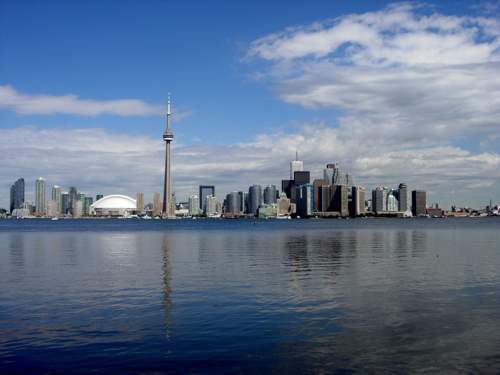
toronto_from_the_island.jpg

I’m a groupie. Not for rock stars or actors or even authors (well, maybe for Ken Bruen and Joyce Carol Oates and the Hard Case Crime writers), but for chefs. Toronto’s Jamie Kennedy is one I’ve been stalking for years. He’s a co-founder of the local chapter of the Slow Food movement, and his commitment to environmental issues, organic agriculture, and local producers is legendary. A decade ago, when I had a steady gig reviewing restaurants for Toronto Life magazine, Kennedy owned the sublime JK ROM, the restaurant at the Royal Ontario Museum. After that well-loved spot became a casualty of the museum’s ambitious renovation plan, the chef opened a new spot downtown.

The Jamie Kennedy Wine Bar is a perfect tapas restaurant. It’s only slightly larger than a cubbyhole, with tables for two lit by candles and barstool perches for those too tired (or hungry) to wait for a table. If you’re not familiar with Ontario vintages, this is one of the finest places to get an education: wines are available in half-size glasses, all the better for sampling. Ask the staff what distinguishes an Ontario Riesling from an Alsatian one, and you’re likely to get a taste of each along with an explanation.

When I told the server that I had celiac disease, she disappeared with my menu. A few minutes later she returned and handed it back to me. I opened the folded page and saw that the entire thing had been annotated in ballpoint pen. Dishes that were not available in a gluten-free version were crossed out, while potential modifications to others were written in. The server went over the menu with me in detail, pointing out potential problems with cross-contamination. I ended up with tapas-sized plates of asparagus with poached egg and pine nuts, tender duck confit, mushroom ragout, and blackberry sorbet.

I’ve been back to the Jamie Kennedy Wine Bar several times, and have had a menu annotated for me on each visit. I’ve also been to the restaurant with friends who suffer from lactose intolerance and food allergies, and have seen the staff lavish the same care that they do with celiacs.

Sorry, Chef Kennedy – you can’t shake this groupie.

Jamie Kennedy Wine Bar [address] 9 Church Street, Toronto, Ontario, Canada [tel] 416-362-1957 [web] www.jkkitchens.com